

Culture at SDG Festival

Culture at SDG Festival

In light of the rapidly evolving COVID-19 outbreak and of their commitment to safety and well-being of SDG partners globally and in Bonn, the organizers of the SDG Global Festival of Actions have made the decision, in consultation with the German Federal Government, local authorities in Bonn and other key stakeholders, to postpone the event.

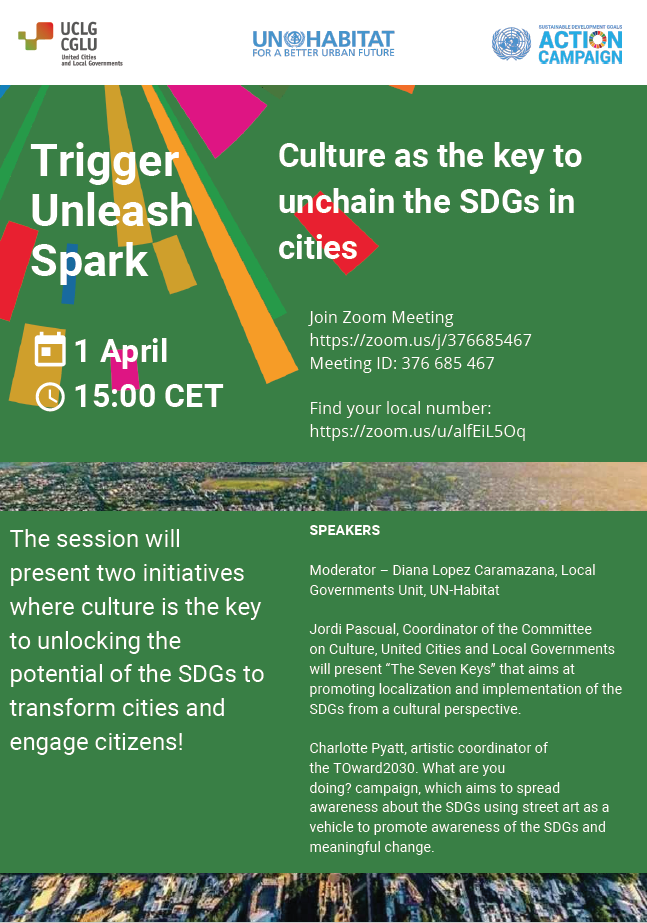
However, some virtual sessions will be maintained, including a session entitled 'Culture as the key to unchain the SDGs in cities'', which will be held via Zoom on 1 April 2020 at 15h00, and in which the coordinator of the Committee on Culture of UCLG will be participating.

More info: https://globalfestivalofaction.org/

Cultural heritage in Action

Cultural heritage in Action

The Cultural Heritage in Action peer-learning programme was launched by a consortium led by EUROCITIES with KEA, ERRIN, Europa Nostra and Architects’ Council of Europe. The programme is addressed to local and regional policy makers to exchange knowledge on cultural heritage, with a focus on participatory governance, adaptive reuse and quality of interventions on heritage.

The aim of Cultural Heritage in Action is to empower cities and regions to strengthen their cultural heritage policies and initiatives and to develop innovative solutions to preserve cultural heritage assets. It is one of the actions of the European Framework for Action on Cultural Heritage.

In this contexte, a catalogue of 30 good practices from EU cities, regions, non-urban and rural areas will be produced, and 12 peer-learning visits bringing together 20+ participants per visit will be organised.

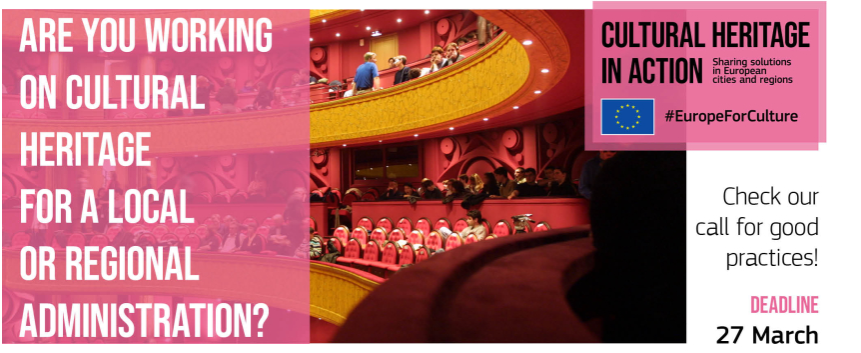
The consortium is now looking for local practices that are innovative, inspiring for other cities and regions and have a real impact on the ground. A call is open until 27 March 2020 to identify 30 practices that will be featured in a catalogue.

In June 2020 a call for participation to peer-learning visits will be launched. It will be open to representatives from local and regional authorities and to cultural heritage stakeholders.


More info: http://www.eurocities.eu/eurocities/news/Cultural-heritage-in-Action-joi...


EuropeAid: Call for projects

EuropeAid: Call for projects

EuropeAid has recently released a call for initative and action grants addressed to Non-State Actors and Local Authorities from all countries and regions, entitled 'Local Authorities: Partnerships for sustainable cities 2020'. The call includes cultural aspects as follow: "The fight against inequality and marginalisation requests also integrated urban development actions, which include the use of culture as factor promoting aggregation and inclusiveness (e.g. cultural urban development in marginal areas and restauration of cultural heritage in historical urban centres)."

More info: https://webgate.ec.europa.eu/europeaid/online-services/index.cfm?ADSSChc...

Cultural Impact Now! Conference

Cultural Impact Now! Conference

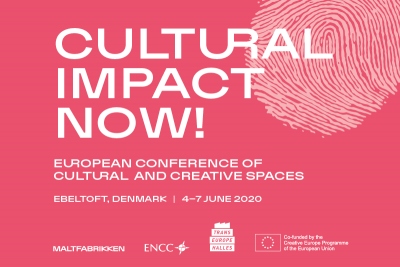
The European Network of Cultural Centres, together with TransEurope Halles will organise on next 4-7 June 2020 a joint Conference entitled "Cultural Impact Now!" in Ebeltoft, Denmark.

This meeting is to be the largest event of its kind in Europe, gathering 400+ professionals from independant and public cultural and social-cultural centres in order to learn about, discuss and evaluate the impact of arts and culture from a critical and holistic perspective.

If you work at a cultural centre — no matter what type — this is the most important event for you this year!

More info: https://encc.eu/activities/events/cultural-impact-now-early-bird-registr...

New report of the UN Special Rapporteur on Cultural Rights: Cultural Rights Defenders

New report of the UN Special Rapporteur on Cultural Rights: Cultural Rights Defenders

The new United Nation Special Rapporteur in the field of Cultural Rights, Karima Bennoune, just released a new report on 'Cultural Rights Defenders'.

This report aims at raising awareness about the work of cultural rights defenders - human rights defenders who defend cultural rights in accordance with international standards - and to increase the attention and assistance they receive. The report includes an overview of the diverse kinds of human rights worl that cultural rights defenders engage in, the challenges and risks they face, and the international legal framework that enables their work, and offers specific recommendations as to how to better support and protect them.

The report will be presented to the Council on next Tuesday, 3 March, tentatively at 16:00. Live-streaming available here: http://webtv.un.org/live/

More info here.

_______________________________________________________________________________________________________________

Prior to this report, the UN Special Rapporteur in the field of Cultural Rights had already published:

Periférica - Local Cultural Policies

Periférica - Local Cultural Policies

The last issue of the Periférica magazine addresses local cultural policies with a series of specific articles, interviews and dossiers that embed the following:

  • local cultural policies
  • public cultural management and governance
  • cultural rights
  • creative practices at the local level
  • international cooperation on culture
  • culture and democracy
  • women and the creative and cultural industries
  • heritage and tourism
  • memory and access to culture
  • and many more.


It also includes a tribute to Eduard Miralles i Ventimilla, cultural manager who especially worked on and the relationship that exists between cultural associationism and political power.

More info here.

Towards a multi-level strategy for EU external cultural relations : bringing cities on board

Towards a multi-level strategy for EU external cultural relations : bringing cities on board

The EU strategy for international cultural relations sets out to move beyond an understanding of cultural diplomacy as soft power and towards a more inclusive and reciprocal approach built around “a new spirit of dialogue, mutual listening and learning, joint capacity-building and global solidarity”. To be fully effective, this strategy needs to involve all levels of governance, in particular cities.

The policy paper 'Towards a multi-level strategy for EU external cultural relations : bringing cities on board' aims to demonstrate the potential of European cities for achieving the objectives of the EU strategy for international cultural relations by proposing a revised multilevel approach. European cities play a major role in the development of cultural ties across borders and they have increasingly established themselves as autonomous international cultural policy actors. Along with the rise of a multi-actor and multilevel diplomatic arena, cities and other sub-national governments have acquired an increasingly important role. The exponential rise in transnational city networks since the early 2000s demonstrates how cities have stepped up to form transnational alliances around an increasingly broader set of issues that were traditionally the domain of nation-states. Many of these networks promote cities as international cultural policy actors and provide effective structures for knowledge sharing and peer-learning on culture-led urban and socioeconomic development, the use of culture to enhance local heritage, further intercultural dialogue and improve citizens’ well-being.

Read more here.

Security, Creativity, Tolerance and their Co-existence: The New European Agenda on Freedom of Artistic Expression

Security, Creativity, Tolerance and their Co-existence: The New European Agenda on Freedom of Artistic Expression

The publication Security, Creativity, Tolerance and their Co-existence: The New European Agenda on Freedom of Artistic Expression, promoted by Freemuse outlines how European governments carry the legal responsibility to respect, protect and fulfil obligations to artistic freedom. The report further draws attention to the alarming trend of governments targeting artists under the existing laws such as anti-terrorism legislation, or with the use of laws prohibiting offending religion such as hurting “religious feelings” and art that is considered to be “blasphemous” or “obscene”.

The report is an analysis of the human right to freedom of artistic expression based on monitoring of legal and policy development and individual cases of violations of artistic freedom in Europe over the past two years (January 2018 to October 2019).

Cultural Heritage valorisation: policy recommendations

Cultural Heritage valorisation: policy recommendations

The ROCK regulatory framework has been envisaged as an assemblage of key policy recommendations  empowering Cultural Heritage as a driver for sustainable and smart growth, with a special reference to public procurement. Its development is an attempt to shape better implementation frameworks, targeting decision and policy makers from all administrative levels. The ROCK deliverable “Regulatory Framework, ROCKProcurement And Policy Recommendations”, coordinated by the expert Sylvia Amann is now published.

WUF10 - Culture & Innovation

WUF10 - Culture & Innovation

The World Urban Forum is an important milestone for cities and local governmemnts. It is a high-level forum convened by UN-Habitat. Every two years it connects the urban and development agenda and it offers an opportunity to meet member states and other partners. The upcoming Tenth Session of the World Urban Forum (WUF10) theme is "Cities of Opportunities: Connecting Culture and Innovation".

The UCLG Culture Committee will participate in several sessions of the World Urban Forum:

SHARE