



Cookies

This portal uses cookies.

If you do not accept the use of cookies, please follow the instructions below to change your browser preferences. If you do not, this means that you accept our cookie use and policy.

What are cookies?

A cookie is a file that is downloaded on your computer or mobile device when you visit certain web pages. Cookies allow a web page, for example, to identify a user session, recall your preferences (e.g. language), gather information about your browsing habits or show you advertising adapted to your preferences.

You can find out more information about cookies at the following link: http://www.allaboutcookies.org/

What cookies do we use on our portal?

All the cookies used on this portal are CULTURE 21's own or third-party cookies, used for technical, analytical and advertising purposes. The types of cookies we use are:

COOKIEDomainPurposeExpiry
cookiesjragenda21culture.netFunctional1 year
DVgoogle.comMarketing20 minutes
_gaagenda21culture.netAnalytical1 year 1 moth

_gaTHT9ZB7QZY

Subscription to our newsletter: the newsletter is sent through applications that enable us to monitor, analyse and obtain statistics on what we send. This monitoring is done though web beacons (also known as “single-pixel" or "clear" GIFs) that are included in electronic images embedded in e-mails for purposes of analysis and monitoring.

Purpose description:

Technical: these are cookies used to find out if the user has JavaScript enabled in his/her browser, with the aim of our content management platform (Drupal) being able to carry out operations in a more efficient manner and improve the user’s experience.

Analytical:  These are cookies that we use to improve our website and blog. We use Google Analytics to carry out this analysis. If you delete them, you can carry on browsing normally.

These cookies gather anonymous information on how users use our website, such as the number of visitors, identifying users and sessions, how the user reached the site, the most visited pages, and the number of users that share content or use forms.

The information gathered by this application is sent by Google, Inc., a Delaware company with headquarters at 1600 Amphitheatre Parkway, Mountain View (California), CA 94043, to its servers in the United States in line with its privacy policy, which you can consult at the following link: http://www.google.com/analytics/learn/privacy.html

The web beacons we use when we send the newsletter are also used for purposes of analysis and statistics. For example, the percentage of e-mails delivered, opened, clicks, web mails or the most used mobile operating systems

Share content and advertising: cookies used by the ShareThis plugin allow users to share content via social networks. ShareThis also uses these cookies for Internet audience measurement of sites that use the ShareThis plug-in, for statistics on Internet use and to link users with topics that would be of interest to them based on visited or shared content (behavioural advertising).

Share comments and advertising: cookies used by the Disqus plugin allow users post comments in our blog and through social networks. Disqus also uses these cookies for Internet audience measurement of sites that use the plugin, for statistics on Internet use and to link users with topics that would be of interest to them based on visited or shared content (behavioural advertising).

Other cookies when social media are used

On our portal we also provide links to our social network accounts (Facebook, Twitter, You Tube, Flickr). Due to the way in which the social networks work, if you access them third-party cookies will be downloaded (from social networks) for technical, analytical and advertising purposes.

However, we have no control over these cookies.

These cookies are of 3 types:

  • Technical cookies, which are necessary to access the content that we share on social networks.
  • Analytical cookies (i.e. Google Analytics), as most of the social networks use analytical tools to gather information on how users use social networks.
  • Advertising cookies, as most of the social networks use cookies to show relevant information and ads according to your preferences (behavioural advertising).

You can consult the cookie policy of the linked social networks at the following links:

Facebook: https://www.facebook.com/help/cookies

Twitter: https://twitter.com/privacy

YouTube: https://www.google.com/intl/en/policies/privacy/

Flickr: https://info.yahoo.com/privacy/es/yahoo/eu/

If you delete social network cookies you will be able to carry on browsing normally, but you won’t be able to use some functions (e.g. share content, etc.).

How to delete cookies

On Browsers:

If you delete these cookies (except technical cookies), you will be able to carry on browsing normally.

Cookies can be deleted by configuring your browser so that it prevents them from being downloaded, as shown below. Depending on the browser you use, you will need to follow the instructions below:

On mobile devices:

iOS

1. On the Home page, press “Settings”.
2. Press “Safari”.
3. Press “Clear cookies and data” and confirm the order and/or select your preferences in the “Privacy and Security” section.

Android

1. Launch your browser from the Home page.
2. Press the “Menu” key, then press “More”.
3. Press “Settings”
4. Scroll down to the “Privacy Setting” section, press “Clear All Cookie Data” and press “OK” and/or select your preferences.

Windows

1. Open your Internet Explorer
2. Tap “More”
3. Press “Settings”
4. Scroll down to the “Cookies” section and then set your preferences.

Web beacons in e-mails
You can disable web beacons in e-mail messages by not downloading the images that the message contains (this function varies according to the e-mail software you use in your personal computer). You can cancel your subscription to our newsletter at any time by selecting this option when you receive it.

Cookie management and disposal tools:

Analytical cookies: With regard to analytical cookies set by Google Analytics, you can delete them by using the Google Analytics disable add-on for browsers https://tools.google.com/dlpage/gaoptout?hl=en or by using your browser's configuration that stops them from being downloaded, as indicated above.

Facebook cookies: users need to log out before visiting our website and stop cookies from being downloaded, using the browser's configuration or any tool such as “Facebook blocker”: http://webgraph.com/resources/facebookblocker/

ShareThis cookies: to block behavioural cookies, press “Click here to Opt Out” from the ShareThis site and review its privacy policy: http://www.sharethis.com/legal/privacy/#sthash.hnEct5Yq.dpbs

Disqus cookies: to block behavioural cookies, press “Opt Out” from the Disqus site and review its privacy policy: https://help.disqus.com/customer/portal/articles/1657951-ad-training-settings

Contact

If you have any queries about our cookie policy, you can contact us at:

Committee on Culture
World Secretariat of United Cities and Local Governments (UCLG)
Carrer Avinyó, 15

Privacy

According to the provisions of Law 15/1999 and Royal Decree 1720/2007 approving the Regulation of Development of the Data Protection Act (Official Data Protection Law), the user is informed of the inclusion of their data in UCLG computer files and its treatment. The data obtained will be derived from navigation and from user queries or suggestions. This data will be treated with the aim of dealing with your request, facilitating enrolment in our organisation, sending you our newsletter or information related to UCLG. We also carry out the monitoring, statistics and analysis of the e-mails and the newsletter we send, with the aim of checking their correct delivery, evaluating the reply received and improving communications with recipients. For more information, consult the Cookies section.

The user has the right to oppose the use of any of their data and its use for any purpose other than what is expressed in this notice, being able to exercise rights of access, rectification, cancellation, and opposition in accordance with current legislation. If this is the case, the user should contactt UCLG – C/ Avinyó 15 (08002) Barcelona.

The user's acceptance that their data can be treated or disposed in the manner provided in this paragraph is revocable, without retroactive effect, in accordance with Articles 6 and 11 of Law 15/1999 of 13 December. Please contact us if you have any queries: [email protected].

Legal notice

The domain www.agenda21culture.net belongs to UNITED CITIES AND LOCAL GOVERNMENTS, hereafter UCLG, a non-profit State association entered in the Register of Associations of the Generalitat under number 28699–J/1, domiciled at Carrer Avinyó, 15, 08002 Barcelona with Tax Code G-63327696.

The information contained in this website is current as of the date of its last update and serves as introductory information for the user, relative to its services, products and other included information

UCLG rejects liability that is derived by the improper use of the contents and reserves the right to update this content when it desires, as well as erase, limit or impede direct access to it, whether temporarily or definitively.

UCLG rejects any liability concerning any information that is not contained in this website, and therefore, not elaborated by UCLG or not published in its name. Additionally, liability is especially rejected concerning information contained in websites from third parties connected by links to the website of UCLG.

Despite the fact that our portal is located in a safe server, we cannot guarantee the absence of viruses or other elements in the Web that can produce changes in your computer system, so UCLG declines any responsibility in this regard. They are also not liable for the consequences of the malfunction of the browser or use of outdated versions.
Reproduction, copying, use, distribution, commercialization, public communication or any other activity that can be carried out with the information contained in these web pages and carried out without the authorization of UCLG is an offence punishable by law.

The present conditions and other legal texts in the portal are subject to the legislation of Spain and the jurisdiction of the Courts of Law of the city of Barcelona.

Accessibility

The accessibility consists of accessing the information while not being restricted by disability or handicap. Many of the people that use the information in our site have circumstances that are very different from ours, as they can:

- Have problems with hearing, vision, or mobility.
- Experience difficulty reading or understanding.
- Maybe they cannot use a keyboard or mouse. - Have a text-only reader, a small screen, or a slow connection.
- Etc.

Accessibility is not only of interest to people with disabilities, but it also improves access to the website in general.

Our accessibility guidelines are:

We try to meet, in most of the content, at least the level of AA and part of AAA defined by W3C WCAG standards and UNE 139803:2004 Spanish regulations.

Interesting features:

Font size

You can resize the text that appears by default. The easiest way to change the text is to hold down the 'Ctrl' key while turning the mouse wheel, or if not available, by means of the + or - keys.

Accessible PDF

This website has been designed to be as accessible as possible and to be compatible with the types of adaptive technology specific to people with disabilities, including screen readers.

We recommend that users download the latest version of Adobe for viewing PDF files:

- It allows Adobe PDF files to be read aloud using the standard operating system "Text to Speech" function.
- It allows more control over the use of screen readers.
- It evaluates the accessibility of an Adobe PDF file.

Other aids

Users who take advantage of screen readers have a link at the top of the code called "Skip to content" that allows the site's navigation bar to be skipped and go directly to the start of the content.

The content and functionality of the website are accessible via keyboard for those who do not use a mouse.

This site uses style sheets (CSS) to control the structure and colours of the website. Therefore, users who use their own style sheets can enjoy the contents of the website also.

To improve the accessibility and ease of use of this website, we invite you to write us and let us know what you think by using our contact form.

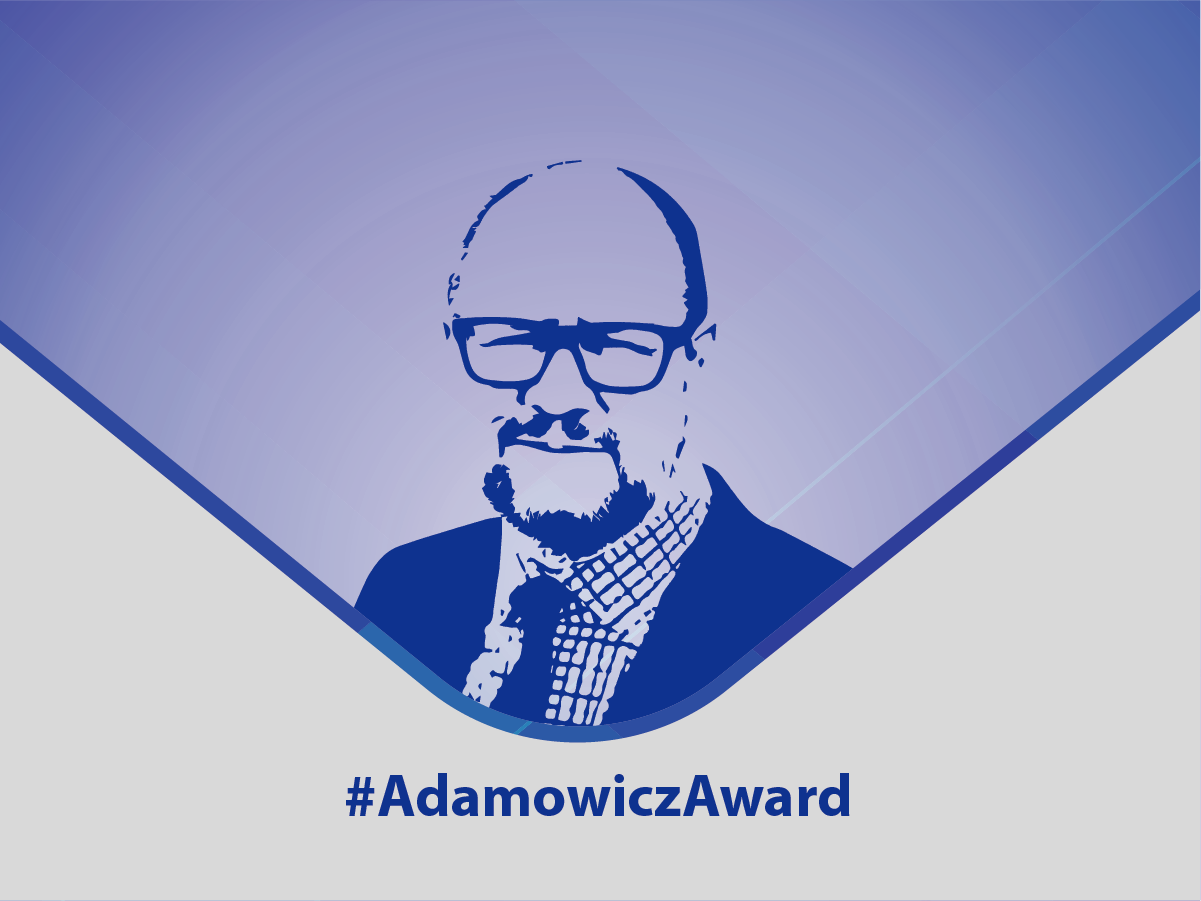
Mayor Paweł Adamowicz Award

Imagen
imatge "mayor pawel"

The City of Gdańsk and the European Committee of the Regions organise every year the Mayor Paweł Adamowicz Award for courage and excellence in the promotion of freedom, solidarity and equality.

The Award represents a strong signal of hope for all elected representatives, officials and ordinary citizens who, despite the risks, live to make democracy work at a local level by supporting better and more open communities.

Nominations are open until the 6 November 2026.

More information, here!

In Situ

Imagen
imatge "IN SITU"

The Committee on Culture of UCLG has a partership with IN SITU "Place-based innovation of cultural and creative industries in non-urban areas", a 4-year project that combines research and experimental actions to advance the innovation-related practices, capacities, and potential of cultural and creative industries (CCIs) based in non-urban areas of the EU countries.

IN SITU is currently exploring how cultural and creative practices can help tackle place-based issues in six non-urban areas representing the six IN SITU Labs: Azores, Portugal; Western coastal region, Ireland; Western region, Iceland; Rauma and Eurajoki municipalities, Finland; Valmiera County, Latvia; Šibenik-Knin County, Croatia. As an outreach partner of this project, the Committee on Culture supports a survey on 'Mapping of cultural and creative projects & selection of case studies', which aims at mapping projects proposing cultural and creative responses to key place-based issues in the six IN SITU lab locations and at identifying the two most relevant, impactful and innovative projects in each Lab location. The survey is now closed. We will keep you updated about new developments soon.

At the beginning of June, the IN SITU researchers met in Finland to present their findings and reports -- D1.1. and D2.1. -- that can be accessed through this website link.

This fall, the In Situ initiative just launched a series of three webinars on Creative Viability in Non-urban Areas, which will address key themes that support the work of cultural and creative ecosystems in non-urban areas in Europe. The first webinar, entitled "What contributes to the viability of creative small-scale entreprises (CCIs) in non-urban areas?" took place online on 28 September 2023, and the second one, entitled "How can CCI innovation ecosystems be fostered in non-urban areas?" was organised on 30 November 2023. 

The last webinar took place on 5 December 2023 under the title "How does cultural and creative work contribute to place-based sustainability and resiliency?". The video recording is available here.


More info here!

MC2CM

Imagen
imatge "MC2CM"

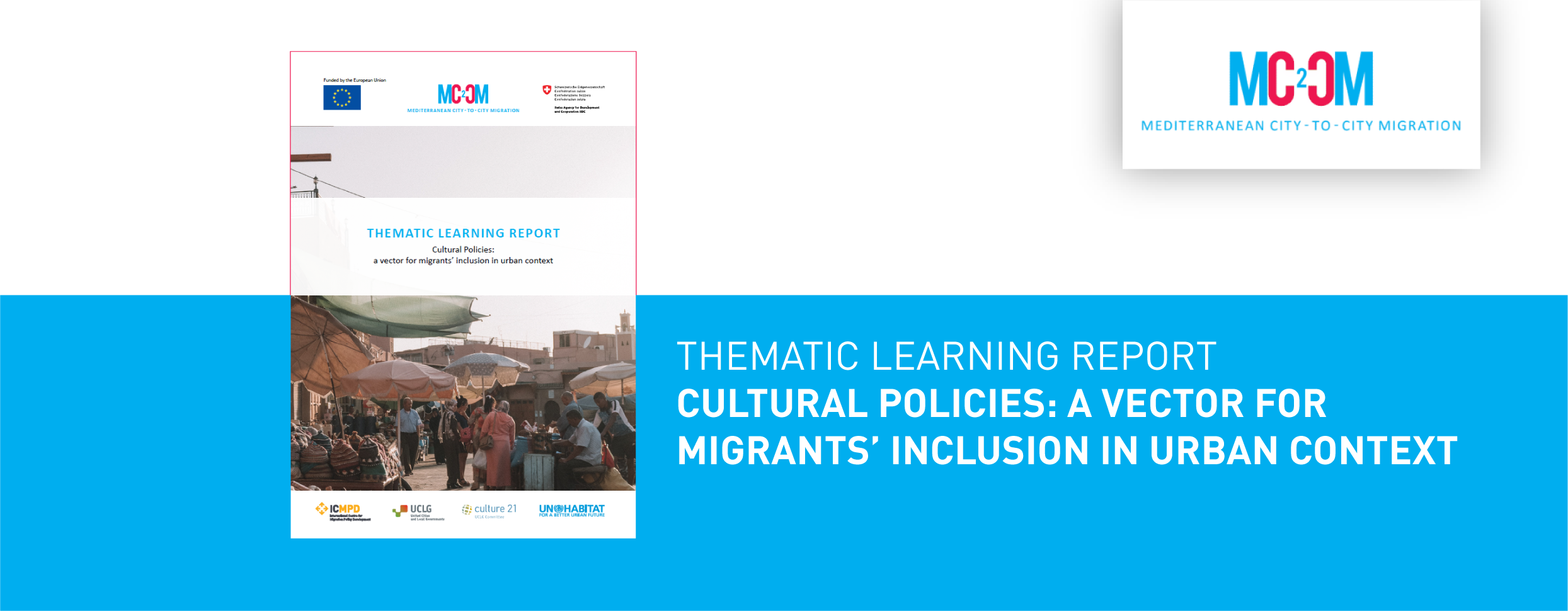
The Committee on culture collaborates with the Mediterranean City-to-City Migration Project (MC2CM), implemented by the UCLG Migration Community of Practice, ICMPD and UN-Habitat, and funded by the European Commission and the Swiss Agency for Development and Cooperation.

MC2CM brings together cities and experts on migration issues, human rights, and sustainable urban development in order to improve migration governance at the city level. MC2CM promotes peer-to-peer dialogues and actions to support learning on specific urban challenges such as social cohesion, intercultural dialogue, employment, housing rights and provision of basic services for migrants.

On 11-12 December 2019 the Committee on culture participated at the MC2CM thematic learning event “Cultural Policies: a vector for migrants’ inclusion in urban context” held in the city of Casablanca, which explored the ways local governments can implement a cultural approach to migration as vector of inclusion and opportunities at the local level. Based on this experience, Jordi Baltà Portolés, cultural consultant and researcher at Trànsit Projectes (Barcelona) and an advisor to the UCLG Committee on Culture conducted a report with the same title, benefiting from the contributions of MC2CM city focal points and partners, as well as from expert Phil Wood’s background document for the event.

More information on the MC2CM project here.

Cultural Development Network (CDN)

Imagen
imatge "cultural development network"

The Cultural Development Network (CDN) advocates for the essential role of arts and cultural expression in the development of creative, healthy, engaged and sustainable communities and support local government cultural development staff and others to assist and resource local communities to make and express their own culture. It is based in Melbourne, Victoria, Australia.

Imagen
imatge "good practice"

Recognising their common aims, the CDN and the UCLG Committee on Culture have collaborated regularly for over a decade. More recently, in 2019 they signed a partnership agreement which focuses in particular on the following items:

  • Exchange of information and learning opportunities, including on the use of the tools and programmes developed by each organisation.
  • Collaboration in the provision of capacity-building, peer-learning and technical assistance, including through the combination of programmes developed respectively by the CDN (e.g. the ‘Measurable Outcomes’ framework and the WhiteBox outcomes planning platform) and by UCLG (e.g. Culture 21 Actions and its related capacity-building schemes, including Culture 21 Lab and Pilot Cities).
  • Exploration of opportunities for the participation of Australian cities in UCLG.

British Council

Imagen
imatge "British Council"

The UCLG Committee on culture has developed a joint partnership with the British Council since 2019 for the collection, identification and promotion of good practices on culture, sustainable development and the UN 2030 Agenda Sustainable Development Goals (SDGs).

The British Council is the UK's international organisation for cultural relations and educational opportunities. It works with over 100 countries in the field of arts and culture, English language, education and civil society. Last year, it reached over 80 million people directly and 791 million people overall including online, broadcasts and publications. The British Council makes a positive contribution to the countries it works with – changing lives by creating opportunities, building connections and engendering trust. Founded in 1934, it is a UK charity governed by Royal Charter and a UK public body. The Biritsh Council receives a 15 per cent core funding grand from the UK government.

The British Council's aims to explore the value of arts, culture and creativity for sustainable development. It facilitates creative responses to global challenges.

So far the collaboration with the British Council has resulted into the publication of various good practices on culture and sustainable development, including from the cities of Athens, Kathmandu, Karachi and soon Ramallah.

SHARE